Top Solar Power Options in China for Global Buyers?
China has emerged as a key player in the global solar market. Its rapidly advancing technology offers numerous solar power options for international buyers. As companies seek sustainable solutions, understanding these options is critical.
Major cities like Shanghai and Shenzhen are hubs for solar innovation. They showcase cutting-edge panels and efficient systems. The wide variety of products caters to diverse energy needs. Yet, it can be overwhelming to navigate. Buyers may find varying quality and performance across the market. Careful evaluation is essential to ensure reliability.
Moreover, the shift towards solar energy is not without challenges. Supply chain issues and regulatory hurdles can complicate procurement. Companies must stay informed about developments in technology and policy. It is crucial to approach the market with a balanced perspective, weighing benefits against potential setbacks. Understanding these solar power options can guide buyers towards making informed decisions.

Current Trends in China's Solar Power Market for Global Buyers
China's solar power market is rapidly evolving, becoming a significant player for global buyers. Recent reports indicate that China accounted for approximately 45% of the world's solar photovoltaic (PV) installations in 2023. This extensive growth has been driven by aggressive government policies and a robust supply chain.
In recent years, the costs of solar panels have decreased substantially. The average price for crystalline silicon panels fell by over 25% in 2022 alone, according to the International Renewable Energy Agency (IRENA). This trend signals a vital opportunity for international buyers looking for cost-effective solar solutions. However, despite these advancements, issues such as supply chain disruptions remain a concern. The impact of these challenges can create delays and increase prices unexpectedly.
Demand for solar energy is projected to rise, with estimates suggesting that China's solar capacity could surpass 1,000 GW by 2025. Yet, potential buyers should carefully evaluate the reliability of suppliers. Variations in quality persist across the market. As buyers navigate these complexities, establishing strong partnerships and conducting thorough due diligence is essential for achieving long-term success in China's solar landscape.
Leading Solar Manufacturers in China for International Partnerships
In recent years, China has emerged as a dominant player in the solar power industry. The country offers a vast array of solar technologies suitable for global buyers. Collaborating with leading manufacturers can provide opportunities for international partnerships. These companies possess cutting-edge technology and substantial experience.
When looking for reliable manufacturers, consider their history in the industry. A long-standing presence often indicates trustworthiness. It's important to research their product certifications and customer feedback. Not all manufacturers maintain the same level of quality.
Tips: Request samples before making large purchases. This helps ensure that the products meet your standards. Engage directly with manufacturers to discuss any specific requirements. Keep in mind that language barriers may complicate communication. Patience is essential in establishing relationships.
Key Regions in China for Solar Power Production and Export
China has become a leader in solar power production. Several regions stand out for their production capabilities and export potential. One such region is Qinghai Province. Its vast landscapes and high solar radiation make it ideal for solar farms. Additionally, the government supports solar projects here, enhancing production efficiency.
Another key area is Xinjiang. It has abundant land and an ideal climate for solar energy generation. Solar panels installed in this region often reach peak efficiency. However, transportation challenges can hinder exports. Infrastructure improvements are necessary to address these issues, ensuring seamless movement of solar products.
Lastly, the Guangdong province showcases innovative solar technologies. This region excels in manufacturing and research. Home to many specialists, Guangdong rapidly develops solar applications. Despite its advancements, competition is fierce. Companies must continuously adapt to maintain their positions in the international market.
Innovative Solar Technologies Emerging from China's Market
China's solar market is thriving, fueled by innovative technologies. Research from the International Renewable Energy Agency (IRENA) shows that China's solar power installations reached 253 GW in 2021, representing 54% of the global total. This rapid growth is supported by significant investments in advanced solar technologies, including bifacial solar panels and perovskite solar cells.
Bifacial panels are gaining traction due to their efficiency. They can absorb sunlight from both sides, leading to up to 27% more energy production compared to traditional panels. Industry reports indicate that bifacial technology can effectively lower the levelized cost of energy (LCOE) by 10%. However, challenges persist, such as the need for improved mounting systems and site selection.
Perovskite solar cells represent another leap forward. These cells are lightweight and flexible, enabling new applications, especially in building-integrated photovoltaics (BIPV). According to recent studies, perovskite technology could reduce production costs by up to 50%. Yet, stability and long-term performance issues remain obstacles. Continuous innovation aims to address these challenges, reinforcing China's role as a leader in solar technology development.
Regulatory Considerations for Global Buyers of Chinese Solar Products
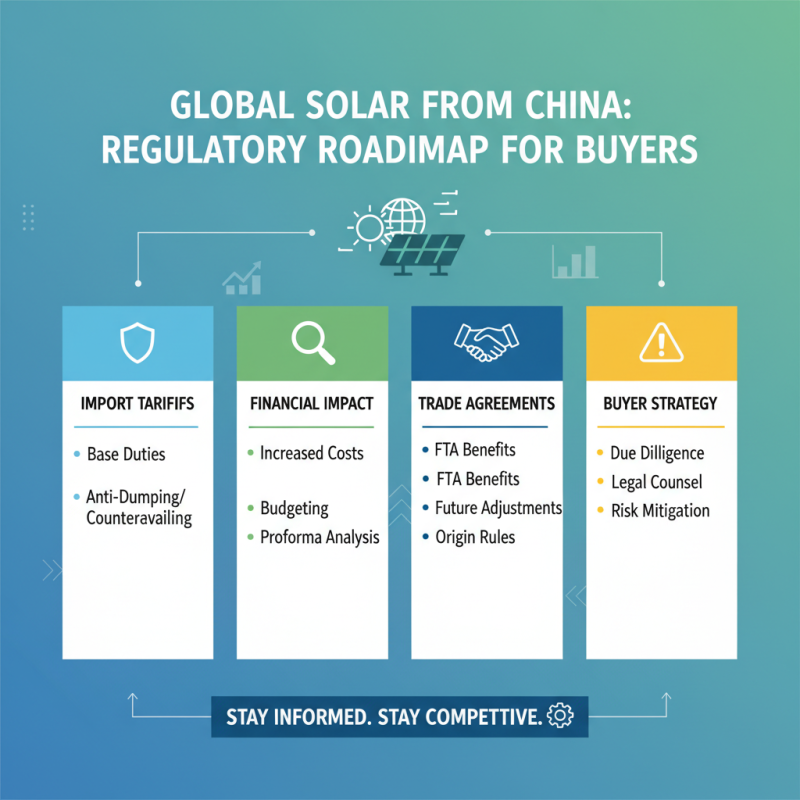
When global buyers consider solar power options in China, regulatory landscapes play a pivotal role. Navigating import tariffs can be challenging. Additional duties can significantly affect costs. Buyers must be proactive in understanding these financial implications. Trade agreements may alter future tariffs, making careful research essential.
Compliance with local standards is another critical factor. Chinese solar products must meet specific quality and safety certifications. Global buyers should verify these certifications in advance. This process can be cumbersome. However, ensuring compliance avoids potential penalties or product rejections at ports. It’s a step that cannot be overlooked.
Buyers may also face challenges with intellectual property rights. Understanding local regulations protects against potential infringement issues. Some buyers report difficulties in continuously monitoring these regulations. Establishing relationships with local experts can help mitigate these concerns. However, the reliability of sources can vary. Therefore, diligence in selecting trustworthy partners is crucial.