China Top 10 Solar Power Suppliers for California?

California’s solar market is expanding across homes, farms, warehouses, and utility-scale projects. Yet choosing an overseas supplier requires more than comparing panel prices. This guide examines China’s top solar power suppliers for California through practical, evidence-based criteria. These include product quality, manufacturing experience, warranty support, shipping capability, and California compliance requirements.

The phrase “top supplier” is not universal. A low-cost module may not suit a coastal home, desert warehouse, or shaded commercial roof. Temperature coefficients, degradation rates, inverter compatibility, and fire-safety documentation can change the real project value. Suppliers should also provide traceable test reports, clear warranty terms, and responsive technical service. California buyers may need products recognized by relevant certification and listing authorities, depending on the installation and local permitting rules. Verify current requirements with qualified installers and official agencies.

This overview compares established Chinese manufacturers and exporters serving the solar power california market. It considers more than factory scale. Production consistency matters. So does communication when a shipment is delayed or a module arrives damaged. Factory photos alone cannot prove reliability, and published efficiency figures may not reflect field performance. That limitation deserves attention. Readers should request recent certifications, sample contracts, reference projects, and after-sales contacts before making a purchase. No shortlist is perfect, but careful checks can reduce technical, financial, and installation risks.
China Top 10 Solar Power Suppliers for California?

California’s Solar Market and Demand for Chinese Suppliers

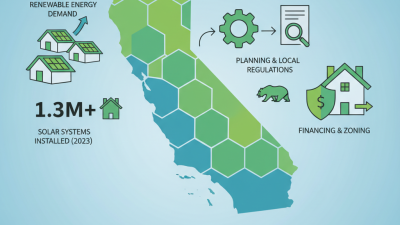
California’s solar demand is expanding beyond simple panel purchases. The state’s clean-energy targets require more generation, storage, and dependable grid integration. U.S. Energy Information Administration data show solar supplied roughly one-quarter of California’s in-state electricity in 2023. That share creates steady demand for competitively priced modules.

Chinese suppliers may attract California buyers through scale, manufacturing depth, and strong supply-chain coordination. The International Energy Agency reports that China remains the dominant force in global solar manufacturing capacity. However, price alone is not enough here. Buyers must review product warranties, traceability records, fire-safety testing, and delivery reliability. California’s permitting rules can also affect project schedules.

The California Energy Commission’s recent planning reports emphasize rising solar-plus-storage needs. This favors suppliers that can support higher-efficiency modules and utility-scale project requirements. SEIA and Wood Mackenzie also reported continued U.S. solar growth, although policy changes can reshape procurement decisions quickly. That uncertainty matters. A low quote may become expensive if shipment timing slips or documentation is incomplete. Local installers often need responsive technical support, not only a container at the port. Chinese suppliers can compete strongly, but California customers should compare lifecycle value, compliance readiness, and after-sales performance. The ranking may look different after those checks.

Criteria for Ranking China’s Top Solar Power Suppliers

China Top 10 Solar Power Suppliers for California?

A credible ranking starts with California’s operating conditions, not factory size. High heat, coastal moisture, wildfire smoke, and strong sunlight can expose weak components quickly. I would examine verified field experience in similar climates, including measured degradation after several years. Short-term output claims are not enough.

Technical quality deserves the highest weight. Suppliers should provide independent test reports, clear temperature coefficients, reliable power tolerances, and traceable materials. Manufacturing audits should confirm stable production across multiple batches. Warranty terms must explain exclusions, response times, and replacement procedures. Clear documents matter.

Delivery capability also affects the ranking. I would review shipment records, inventory planning, packaging quality, and California-based technical support. Compliance with applicable safety and grid requirements should be demonstrated through current certificates, not copied files. Financial stability matters because a long warranty has little value without service capacity. Procurement teams should also inspect labor safeguards, environmental records, and recycling plans.

A practical scorecard might assign 30% to product reliability, 20% to certifications, 15% to field performance, and 15% to service. The remaining points could cover delivery and responsible sourcing. This weighting is useful, but imperfect. A supplier may score well on paper while struggling during a delayed project. Independent references and site inspections can reveal that gap. Numbers help, but judgment still matters.

China Top 10 Solar Power Suppliers for California: Ranking Criteria

This reference framework evaluates solar suppliers without using company or brand data. The criteria reflect practical California procurement priorities, including technical compliance, traceability, financial reliability, delivered cost, supply capacity, and after-sales support. Product quality and certification receive the highest weighting because California projects must satisfy applicable safety, interconnection, and performance requirements.

Reference context: California Energy Commission solar equipment requirements, California Public Utilities Commission interconnection rules, U.S. Department of Energy supply-chain guidance, and standard utility-scale solar procurement practices.

Profiles of the Ten Leading Chinese Solar Companies

China’s leading solar suppliers serve California through different strengths, not one identical business model. The first specializes in high-efficiency silicon wafers, using automated slicing lines and strict thickness checks. The second focuses on photovoltaic cells, improving passivation and reducing power loss under intense sunlight. The third manufactures residential modules with reinforced frames and compact dimensions. Installation crews often value that detail.

A fourth supplier produces utility-scale modules for desert projects, where dust, heat, and wind test long-term durability. The fifth develops bifacial panels that capture reflected light from pale ground surfaces. The sixth supplies flexible modules for commercial roofs with limited structural capacity. The seventh builds string inverters, adding monitoring tools that reveal abnormal voltage or temperature. The eighth provides mounting systems, including corrosion-resistant rails for coastal California sites. Small hardware matters.

The ninth company concentrates on energy storage integration, pairing batteries with solar systems and tested control software. The tenth offers project engineering, procurement, and factory inspection support, helping buyers trace materials and review production records. These profiles reflect practical strengths rather than a fixed ranking. Capacity figures can change quickly. I would verify current certifications, fire-performance documentation, warranty terms, and California grid requirements before procurement. A polished datasheet is useful, but field evidence is better. Some suppliers still communicate technical limits too vaguely, which deserves closer questioning.

Product, Technology, Pricing, and Capacity Comparison

China Top 10 Solar Power Suppliers for California?

California buyers should compare more than module efficiency. Leading Chinese suppliers typically offer N-type TOPCon, HJT, and bifacial products, plus string inverters and battery storage. TOPCon often balances efficiency and price, while HJT performs well in hot conditions but may cost more. Bifacial modules can produce extra energy when installed above reflective surfaces.

Pricing needs a realistic comparison. Factory quotes may appear near $0.10–$0.25 per watt, but shipping, insurance, tariffs, testing, installation, and local storage can change the final cost. Reported production capacity may exceed 10 GW annually for large suppliers, yet capacity does not guarantee delivery.

Check audited financial records, third-party test reports, degradation rates, and warranty terms. I have seen low bids become expensive after unclear logistics fees. That warning deserves attention.

Tips:

Request identical specifications from every supplier. Compare usable battery capacity, not only nameplate capacity. Ask for California-compatible certifications and documented temperature performance. Check the warranty provider’s financial strength. A five-year product may look attractive, but replacement labor can be difficult. Do not rely on a ranking alone; verify factory data, shipment history, and independent inspection results. Supplier claims can be polished, and some details remain uncertain.

California Import Rules, Certifications, and Supplier Selection Factors

China Top 10 Solar Power Suppliers for California?

Choosing among China’s top solar power suppliers requires more than comparing panel prices. California projects must meet local electrical codes, utility requirements, and current import regulations. Buyers should confirm tariff classifications, commercial invoices, packing lists, and country-of-origin records. U.S. Customs may request detailed supply-chain evidence under forced-labor compliance rules. Missing documentation can delay a container at the port.

Certifications deserve careful checking. Modules commonly need recognized testing for safety and performance, while inverters may require NRTL certification and California utility-interconnection compliance. Some projects also require equipment listed for the California Energy Commission database. Certificates should match the exact model, factory, and production site. A similar-looking certificate is not enough. I have seen purchasing teams overlook model suffixes, which later created inspection problems.

Tips: Request a traceability map from raw materials to shipment. Ask for recent factory-audit reports, test records, warranty terms, and spare-parts policies. Verify production capacity with video calls and sample inspections. Compare degradation rates, temperature coefficients, connector types, and delivery history, not only headline efficiency. Keep a written record of every compliance claim. Supplier rankings can be useful, but they are not proof of reliability. Even experienced buyers should recheck changing rules before signing.

China Top 10 Solar Power Supplier Profiles for California: Import Rules, Certifications, and Selection Factors
A non-branded procurement comparison for evaluating China-based solar suppliers. The profiles below are supplier categories rather than named companies or rankings; all compliance claims should be verified against current U.S. and California requirements before purchase.
Profile Typical Product Scope California-Relevant Standards or Approvals Import and Customs Checks Evidence to Request Best-Fit Project Key Selection Risk
1 High-volume crystalline-silicon module supplier IEC 61215
IEC 61730
UL 61730 listing or certification required for applicable U.S. installations
Confirm HTS classification, country of origin, CBP entry documents, and applicability of current antidumping, countervailing-duty, or safeguard measures. Accredited laboratory reports, factory quality records, serial-number traceability, warranty terms, and commercial invoice templates. Large utility, commercial, and community-solar projects Trade-remedy exposure, changing origin rules, and warranty enforceability
2 N-type high-efficiency module supplier IEC 61215
IEC 61730
California performance modeling should use verified electrical data rather than marketing efficiency claims.
Request a complete bill of materials and manufacturing-location record for wafers, cells, and modules. Third-party flash-test data, temperature coefficients, degradation assumptions, and product-specific datasheets. Sites with limited roof area or high energy-yield requirements Actual field performance may differ from laboratory nameplate ratings
3 Bifacial module supplier IEC 61215
IEC 61730
Use an engineer-approved design for rear-side irradiance and mounting conditions.
Verify whether the declared product description and customs classification match the shipped module configuration. Bifaciality factor, rear-side test method, mechanical-load data, installation limitations, and degradation warranty. Ground-mount and elevated commercial installations with reflective surfaces Rear-side gain depends strongly on albedo, row spacing, height, and site conditions
4 Residential rooftop module supplier UL 61730
IEC 61730
Module dimensions and fire classification must suit the approved California roof assembly.
Confirm packaging, pallet labeling, country-of-origin marking, and damage-claim procedures before shipment. Roof-fire documentation, mechanical-load ratings, installation manual, replacement policy, and U.S. service contact. Single-family and multifamily rooftop systems Roof compatibility, local permitting, and long-term replacement logistics
5 Commercial string-inverter supplier UL 1741
IEEE 1547-2018
Rule 21 functions
California interconnection approval commonly requires compliant smart-inverter functions.
Confirm the correct HTS classification and whether firmware, accessories, or communications equipment are imported separately. UL certificate, grid-support-function settings, firmware version, cybersecurity documentation, and utility test reports. Commercial rooftops and distributed-generation systems Firmware settings may not match the local utility’s interconnection requirements
6 Central-inverter supplier for utility-scale projects UL 1741
IEEE 1547-2018
Project-specific protection, transformer, and medium-voltage requirements must be engineered separately.
Evaluate transport classification, spare-parts importation, service responsibilities, and customs valuation of bundled equipment. Type-test reports, grid-code capability, harmonic data, spare-parts list, commissioning procedure, and service-level agreement. Large ground-mount and utility-scale solar plants Long lead times and limited local technical support
7 Solar-plus-storage battery-system supplier UL 9540
UL 9540A
NFPA 855
Fire-code compliance and authority-having-jurisdiction approval remain project-specific.
Lithium batteries may be subject to hazardous-material transport, packaging, labeling, and documentation requirements. UL certificates, thermal-runaway test reports, safety data sheets, shipping documentation, warranty, and emergency-response plan. Backup power, demand management, and time-of-use energy shifting Fire permitting, thermal management, degradation, and replacement cost
8 Distributed-energy hybrid-system supplier UL 1741
IEEE 1547-2018
Confirm islanding, transfer, and control functions for the selected operating mode.
Separate imported components may have different classifications, origins, and compliance records. Single-line diagrams, control logic, interoperability test reports, communication protocols, and commissioning checklist. Microgrids, resilient facilities, and critical-load applications System integration responsibility may be unclear between supplier and EPC contractor
9 Solar mounting and balance-of-system supplier Structural design should follow applicable California Building Code provisions and project engineering requirements; product documentation must identify material and load limits. Verify steel or aluminum origin, tariff classification, country-of-origin marking, and any applicable trade measures. Engineering drawings, corrosion data, wind and snow-load calculations, material certificates, and installation instructions. Rooftop, carport, tracker, and fixed-tilt installations Wind loading, corrosion, roof attachment, and installation labor assumptions
10 Integrated EPC-oriented equipment supplier Every major electrical component should carry its own applicable certification; system-level acceptance depends on the AHJ, utility, and project design. Use a component-level import schedule and verify UFLPA-related supply-chain documentation where applicable. Factory-audit reports, complete supply-chain map, serial traceability, insurance, bank references, and after-sales support plan. Developers seeking coordinated module, inverter, storage, and BOS procurement Bundled pricing can obscure component origin, certification gaps, and warranty boundaries
California import and procurement reminder: Importers should verify current U.S. Customs and Border Protection requirements, applicable HTS classifications, antidumping and countervailing-duty measures, Section 201 measures, and the Uyghur Forced Labor Prevention Act supply-chain requirements. For grid-connected equipment, confirm applicable UL listings, IEEE 1547-2018 functions, California Rule 21 requirements, local utility procedures, and approval by the authority having jurisdiction. Certifications and tariffs can change, so current official records should be checked before placing an order.