What is Solar at No Cost and How Does It Work?
In recent years, the concept of "solar at no cost" has gained considerable attention. This model allows homeowners to install solar panels without upfront expenses. Industry expert John Smith, a leading advocate for renewable energy, states, "Solar at no cost opens doors for those previously unable to invest." His insights highlight how this approach democratizes solar energy access.
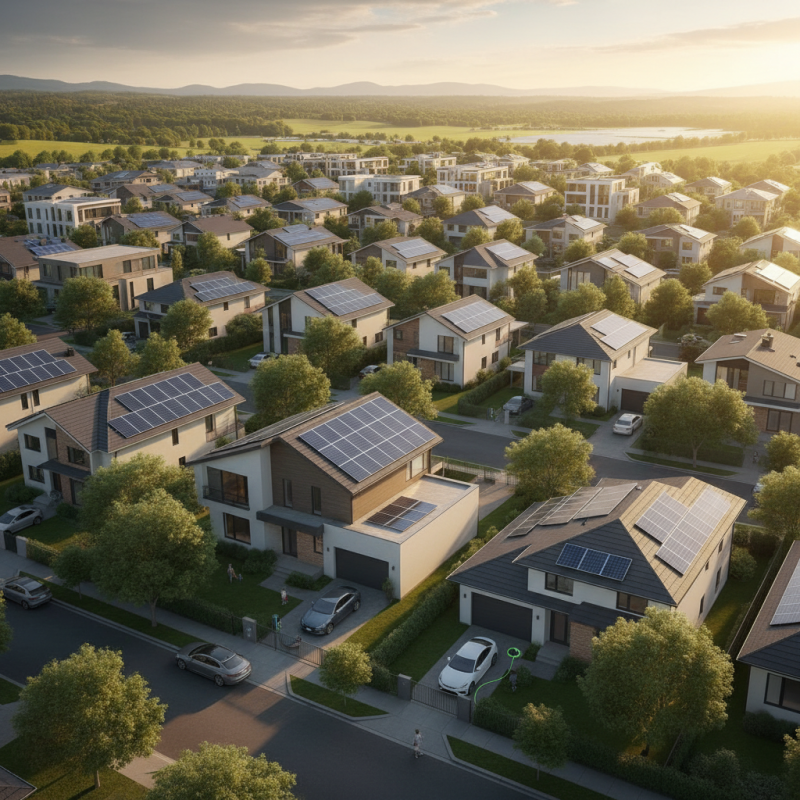
Imagine a neighborhood where all homes are powered by the sun's energy. With "solar at no cost," families can save on electricity bills while contributing to a greener planet. Yet, it's essential to consider potential drawbacks. Some might worry about long-term contracts or the quality of installations. Transparency is key; understanding the terms is vital for homeowners.
While the allure of no initial payment is strong, it’s crucial to reflect on the potential commitments involved. Not every provider will offer the same value. Homeowners need to research thoroughly. "Solar at no cost" can be truly beneficial, but only if approached with careful scrutiny and informed choices.
What Does "Solar at No Cost" Mean?
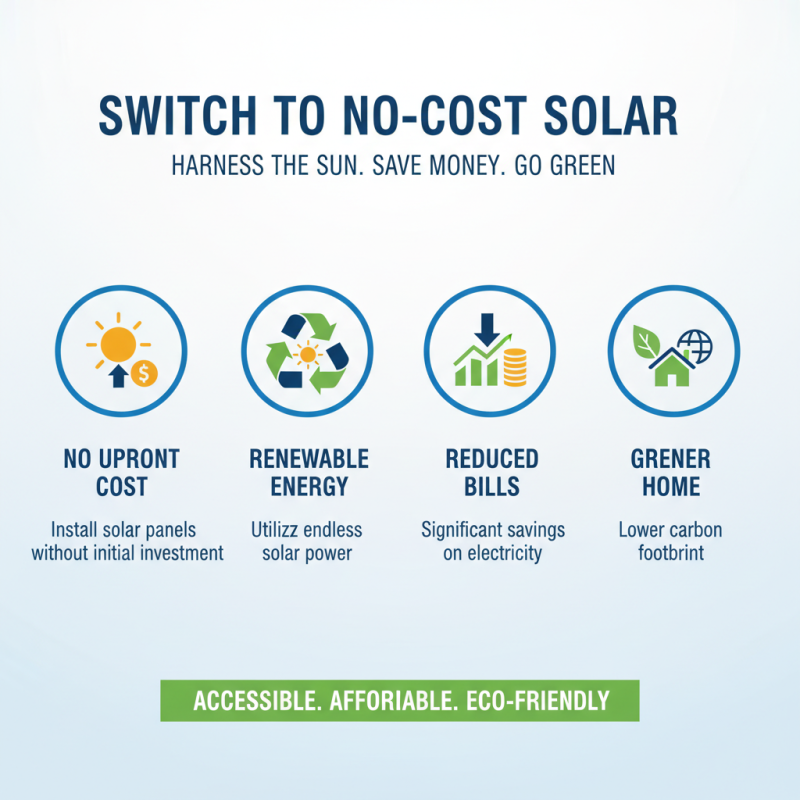
"Solar at No Cost" often refers to solar energy programs where homeowners can install solar panels without upfront payments. These arrangements typically involve financing options or power purchase agreements (PPAs). The idea is appealing, especially as more homeowners seek renewable energy solutions.
Industry data shows that the solar market is expanding rapidly. According to the Solar Energy Industries Association, residential solar installations grew by 20% in the past year. Yet, many are unaware of financing options that can make solar affordable. Programs that promise minimal to zero upfront costs typically transfer the financial burden to long-term agreements. This can lead to significant savings, though homeowners must consider potential drawbacks, such as contract terms and potential rate increases.
Solar technology is evolving but comes with challenges. While initiatives suggest cost-free solutions, some homeowners report hidden fees. Transparency is crucial for success. Some solar providers may not explain financial implications clearly. Evaluating all options can ensure a wise decision. Understanding the true cost of solar can lead to better long-term investments. Careful consideration of these factors is needed for anyone looking to transition to solar energy at no cost.
The Mechanism Behind No-Cost Solar Programs
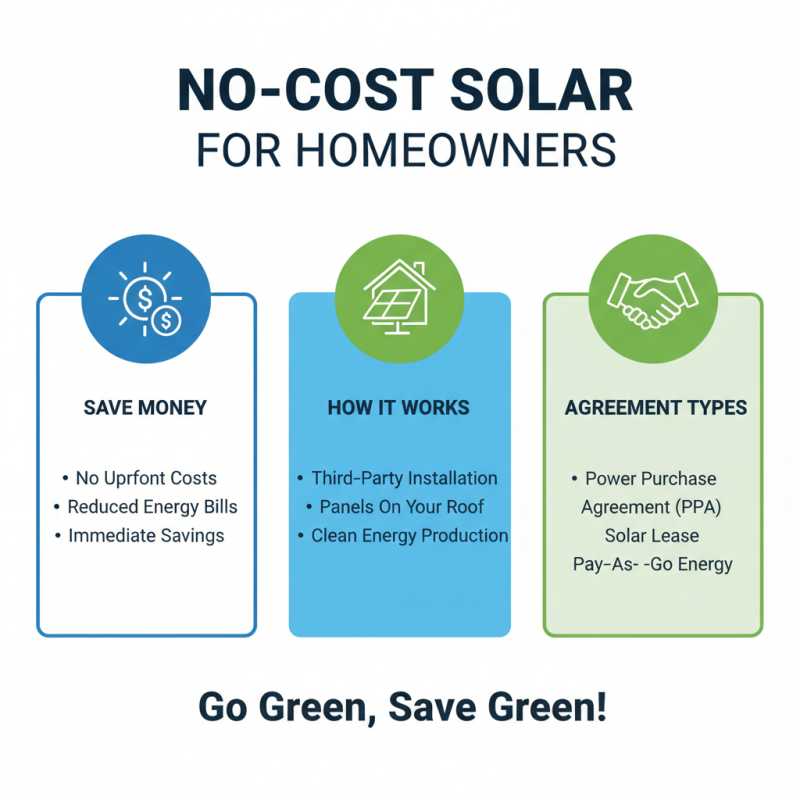
No-cost solar programs offer homeowners a unique opportunity to harness solar energy without hefty upfront expenses. These programs typically work through a Power Purchase Agreement (PPA) or a lease agreement. Essentially, a third party installs solar panels on your property, and you agree to buy the energy produced at a reduced rate. This setup allows you to start saving on your energy bills immediately.
Consider this: you don’t own the panels. You are renting energy. Sometimes, this can lead to complications. If the equipment malfunctions, who is responsible for repairs? It’s a good idea to read the fine print. Knowing your obligations is crucial before entering an agreement. Be prepared for some unforeseen costs that may arise.
**Tips:** Always compare multiple offers. Each program has different terms and conditions. Speak to homeowners who have used these services. Their experiences will help you navigate the process. Also, check local regulations. They can affect your savings and installation process.
Common Misconceptions About No-Cost Solar Solutions
Many people misunderstand no-cost solar solutions. They think it's completely free. In reality, these options often involve contracts or agreements. You may not pay upfront, but you could still face costs later. For example, some plans require monthly payments. Others may have hidden fees. This creates confusion for many homeowners.
Another common misconception is about ownership. Some assume they own the panels after installation. In many cases, that's not true. Often, the company retains ownership. This means they handle maintenance but you miss out on some benefits. The savings on energy bills may be less significant than expected. Additionally, some agreements last for decades, which can lead to more uncertainty.
People also worry about property value. They think solar panels will automatically increase it. However, the effect can vary greatly. In some markets, buyers appreciate solar systems. In others, they may be hesitant. Understanding these nuances is crucial when considering solar. Always read the fine print before making a decision.
What is Solar at No Cost and How Does It Work? - Common Misconceptions About No-Cost Solar Solutions
| Feature |
Description |
Common Misconception |
| No Upfront Cost |
Solar installations can be financed through leases or power purchase agreements. |
Many believe "no cost" means no financial commitment whatsoever. |
| Energy Savings |
Homeowners can save on electricity bills immediately after installation. |
Some think that savings are only seen after the system is fully paid off. |
| Ownership |
With some agreements, homeowners can own the system after the lease term. |
It’s commonly thought that leasing means you never own the system. |
| Environmental Impact |
Solar energy reduces carbon footprint and promotes sustainability. |
Some believe only purchased systems have environmental benefits. |
| Maintenance Costs |
Many no-cost solar options include maintenance as part of the agreement. |
It's often suspected that maintenance is always an extra cost. |
Steps to Enroll in a No-Cost Solar Program
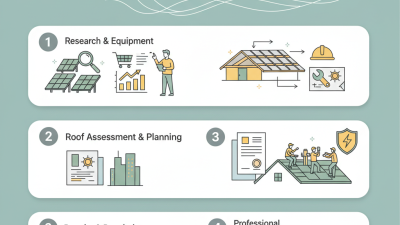
Enrolling in a no-cost solar program can be an exciting step towards renewable energy. Many homeowners are unaware of the easy steps involved. First, one must research local providers offering no-cost options. According to a recent report, over 80% of homeowners are eligible for such programs. This can significantly reduce monthly energy bills.
After selecting a provider, you'll fill out an application. This often takes around 15 minutes. The application may ask for basic details like energy usage and roof type. It’s essential to provide accurate information to avoid delays. A site assessment usually follows. This step determines if your home is suitable for solar panels.
Finally, if approved, installation will occur at no upfront cost. It's vital to remember that some people may face issues with their credit scores during this process. However, many programs cater to different financial situations. As a result, it's possible to find an option that fits your needs. With the right approach, transitioning to solar power can be seamless.
Cost Savings of No-Cost Solar Programs
This bar chart illustrates the estimated savings over a five-year period from participating in a no-cost solar program. The savings increase significantly each year, demonstrating the financial benefits of solar energy adoption without any upfront costs.