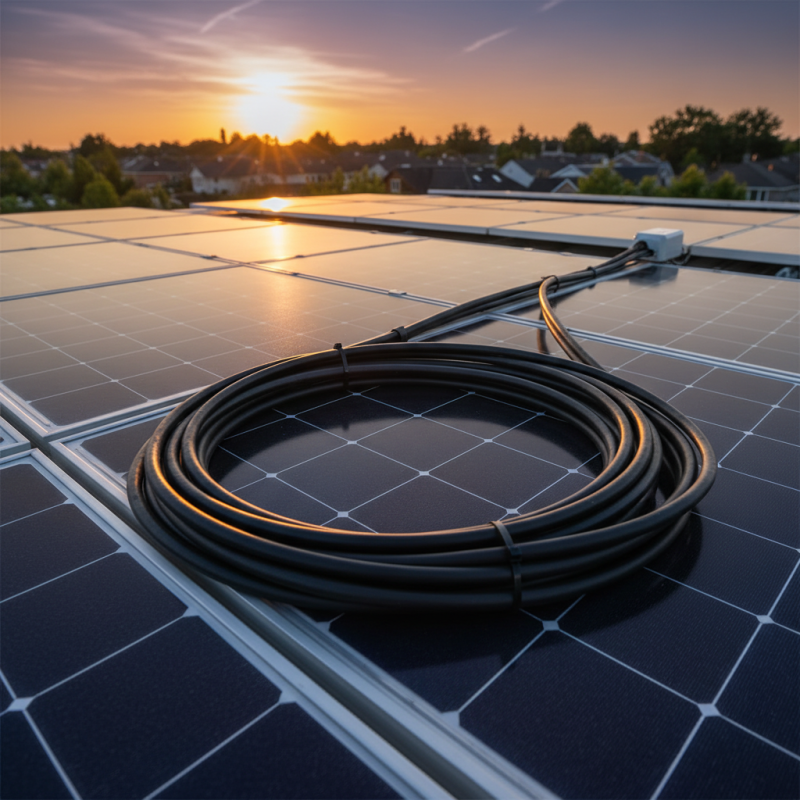
How to Choose the Right 4mm Solar Cable for Your Needs?
Choosing the right 4mm Solar Cable is crucial for any solar installation. A proper cable ensures efficiency and longevity for your system. As solar energy becomes more popular, understanding cable specifications becomes vital.
4mm Solar Cables typically offer adequate performance for many residential and commercial applications. However, not all cables are created equal. Factors like material quality, insulation, and temperature ratings are essential considerations. Selecting the right cable can significantly impact energy transfer efficiency and safety.
It's important to remember that mistakes in cable choice can lead to serious issues. A subpar cable may degrade quickly or fail to support your energy needs. Hence, it’s worth investing time in research. Real experiences from professionals highlight the importance of quality and appropriate selection. Understand your specific requirements to ensure the best outcome for your solar project.
Understanding the Basics of 4mm Solar Cables
When choosing a 4mm solar cable, understanding its basics is crucial. These cables are specifically designed to carry electricity from solar panels to inverters or batteries. A 4mm cable can typically handle currents up to 30 amps. However, this capacity may decrease depending on the cable length and the ambient temperature. It's essential to consider these factors based on your installation.
The insulation material of solar cables is another important aspect. Most 4mm solar cables use durable polyethylene or thermoplastic materials. These materials are UV resistant and can withstand high temperatures. However, not all cables perform equally in harsh conditions. It's worth investigating the specifications and certifications of the cables you consider, even if it means taking extra time.
Users may encounter challenges when selecting the right cable. For example, does the cable meet local electrical codes? Are there better options for specific installations? It's not uncommon to feel overwhelmed by the choices available. Taking the time to research can prevent costly mistakes. Ultimately, even small decisions, like choosing the right insulation, can impact overall performance and safety.
Identifying Your Solar Power System Requirements
When selecting a 4mm solar cable, understanding your solar power system's requirements is crucial. Start by assessing your total wattage output. This determines the cable's capacity needed for optimal performance. For example, if your panels produce 300 watts each, and you have five, you are looking at 1500 watts. This wattage affects the voltage drop, which can impact efficiency.
Next, consider the cable length. Longer runs may lead to higher resistance, which can reduce the energy reaching your inverter. It’s important to strike a balance between distance and performance. Shorter distances are better but might not always be feasible. Reflecting on your layout can provide insights.
Additionally, think about the environment. Are you dealing with extreme temperatures or potential physical damage? Protective measures, such as using UV-resistant sheathing, are vital.
These factors are often overlooked but essential. Misjudging wattage or length can lead to inefficiencies. Regularly assessing your system’s performance will help catch issues early. This reflection can guide future installations or upgrades. Consider consulting with professionals if uncertainty arises. They can provide tailored advice for your specific situation.
Evaluating Environmental Factors Affecting Cable Selection
When selecting a 4mm solar cable, environmental factors play a crucial role. Climate conditions can greatly influence your choice. For instance, areas with high temperatures require cables that can withstand heat without degrading. UV protection is essential for regions exposed to intense sunlight.
Humidity and moisture levels also matter. Cables in humid environments should resist corrosion effectively. Choosing cables with good waterproof ratings can prevent premature failure. In areas prone to extreme weather, like storms, durability is key. Look for robust materials that withstand harsh conditions.
The installation location impacts cable performance. For outdoor installations, flexibility is necessary for easy routing. Indoor setups might prioritize fire resistance. Consider soil types if cables will be buried. Unstable soil can affect cable integrity over time. Acknowledging these factors may lead to necessary adjustments during selection. Always assess conditions before making a choice.
Assessing Cable Quality and Certifications
When selecting a 4mm solar cable, assessing its quality is crucial. High-quality materials directly correlate with the efficiency and longevity of your solar system. Reports from the International Electrotechnical Commission indicate that cables made from oxygen-free copper significantly enhance conductivity, minimizing energy loss. Copper cables tend to outperform aluminum counterparts, ensuring optimal solar energy transmission.
Certifications play a vital role in establishing cable reliability. Look for products that comply with IEC 60227 standards, which dictate insulation and durability. A reliable solar cable should also be UV-resistant and temperature-rated, suitable for varying climates. Inadequate insulation can lead to degradation and potential hazards. The National Renewable Energy Laboratory asserts that improper cable choice can decrease overall system performance by up to 30%.
While many cables claim high standards, not all meet necessary certifications. It's important to thoroughly verify claims and consider third-party testing. Subpar cables may offer lower upfront costs but could lead to greater expenses over time due to replacements and energy loss. Investing in quality ensures safety and efficiency for years ahead, helping you avoid costly mistakes.
How to Choose the Right 4mm Solar Cable for Your Needs? - Assessing Cable Quality and Certifications
| Parameter | Description | Rating | Certification |
| Material | Copper | Excellent | UL 4703 |
| Insulation Type | XLPE (Cross-Linked Polyethylene) | Good | IEC 60228 |
| Cable Flexibility | Very flexible for easy installation | Excellent | ISO 9001 |
| Temperature Rating | -40°C to +90°C | Good | UL 1581 |
| UV Resistance | UV-resistant; | Excellent | IEC 60529 |
Comparing Costs and Performance of Different 4mm Solar Cables
When sourcing the right 4mm solar cable, costs and performance are vital aspects to consider. The average price of 4mm solar cables varies significantly based on the material and manufacturer. A standard copper cable can range from $0.50 to $1.50 per meter, while aluminum cables are usually cheaper. However, lower upfront costs often correlate with reduced performance and durability over time.
Performance metrics such as current-carrying capacity and voltage drop play critical roles in deciding which cable to choose. For instance, a well-insulated 4mm cable can handle a current of up to 30 amps with a minimal voltage drop of 2% over short distances. Conversely, lower-quality cables may experience a voltage drop exceeding 4%, impacting overall efficiency. Additionally, using higher-quality materials can result in better heat resistance and longevity, ultimately saving costs over its lifespan.
According to industry studies, using optimal cable configurations can improve system efficiency by up to 10%. This improvement illustrates the importance of not just looking at costs but also considering overall performance. Prospective buyers should balance these factors to ensure they select the right cable for their specific solar system needs.
Comparison of Different 4mm Solar Cable Types