How to Choose the Best EV Charger for Your Electric Car?
Choosing the right Ev Charger Car is crucial for an electric vehicle owner. With many options on the market, making a decision can feel overwhelming. Each charger comes with different features, charging speeds, and installation requirements that cater to various needs.
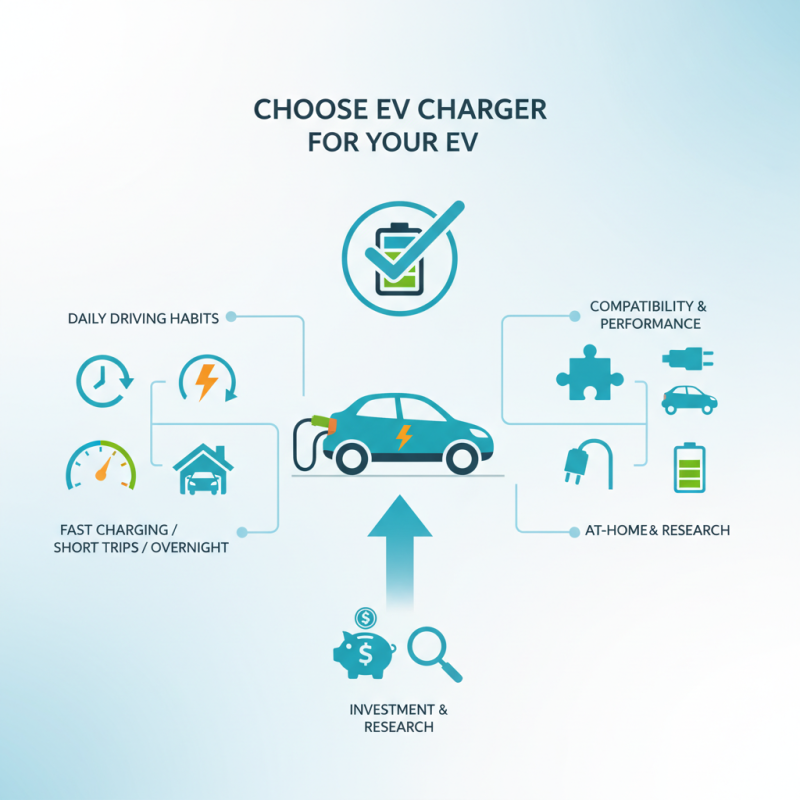
Consider your daily driving habits when selecting an EV charger car. Do you rely on fast charging for short trips, or do you prioritize at-home charging? Understanding your usage can help narrow down your options.
Finding a reliable and efficient charger can be challenging. Not every model will suit every electric vehicle. It’s important to evaluate compatibility and performance. The investment in an EV charger car is significant, and making the right choice matters. Assessing your requirements and conducting thorough research will lead you to the best option for your electric vehicle.
Understanding Electric Vehicle Charging Types and Standards
Understanding the various types of electric vehicle (EV) chargers is essential for any EV owner. There are three main types: Level 1, Level 2, and DC fast chargers. Level 1 chargers are the slowest. They are basically standard household outlets. Charging can take a long time, sometimes over 12 hours. Not ideal for everyone’s schedule.
Level 2 chargers offer a significant upgrade. They can charge a vehicle in just a few hours. These are commonly found in public places or can be installed at home. However, it requires a professional installation. This adds to the cost and effort. Reliability can vary, as not all installations are perfect.
DC fast chargers are the quickest option. They can charge an EV to 80% in about 30 minutes. However, they may not always be available. Sometimes, the network is overloaded. You might face long wait times, which is frustrating. Each charger has different connector types and standards. Understanding which one is compatible with your vehicle is crucial for a seamless experience. Choosing the right charger involves careful consideration of your driving habits and daily needs.
Electric Vehicle Charger Types and Charging Speed Comparison
This chart illustrates the charging speeds for different types of electric vehicle chargers, measured in miles of range added per hour. Level 1 chargers provide the slowest charging speed, while DC Fast chargers offer the fastest option, making them ideal for quick top-ups on the go.
Evaluating Your Electric Car's Charging Needs and Compatibility
When evaluating your electric car's charging needs, it's crucial to consider your daily driving patterns. Pay attention to how far you drive each day. Many drivers find they can charge overnight, but consider your routine. Some may need quicker charging during the day. This can significantly impact your choice of charger.
Tips: Check your car’s charging capacity. Ensure the charger you select matches or exceeds your car's requirements. This will optimize charging speed and efficiency.
Compatibility is another key factor. Different electric vehicles have varying charging port types. Make sure the charger you choose can connect to your car. Not all chargers are created equal, and using an incompatible one can lead to frustration and inefficiency.
Tips: Research whether you need a Level 1 or Level 2 charger. A Level 2 charger charges faster but may require professional installation. Determine what works best for your home and driving habits. The right charger can simplify your charging experience, but choosing poorly can lead to problems. Reflect on your needs carefully before making a decision.
How to Choose the Best EV Charger for Your Electric Car?
| Charger Type | Charging Speed (kW) | Best For | Installation Cost ($) | Compatibility |
| Level 1 Charger | 1.4 kW | Home Charging | 100 - 300 | All EVs |
| Level 2 Charger | 3.3 - 22 kW | Home and Public Charging | 500 - 1,200 | Most EVs |
| DC Fast Charger | 50 - 350 kW | Public Charging Stations | 10,000 - 40,000 | Select EVs |
| Solar Charger | Varies | Eco-Friendly Charging | 1,000 - 5,000 | All EVs |
Comparing Home vs. Public Charging Options and Their Costs
When choosing between home and public charging options for electric vehicles (EVs), costs play a significant role. Home chargers typically cost $500 to $2,000, including installation. Public charging stations, however, can charge per kilowatt-hour (kWh) or by the minute. According to a 2023 report, public charging costs can vary widely, from $0.10 to $0.20 per kWh, depending on the location and the service provider.
Home charging offers the convenience of charging overnight, making it an ideal choice for daily commutes. However, some users might face high installation costs or lack access to a garage. In contrast, public charging may be beneficial for long trips, enabling faster charges during road breaks. However, availability and wait times can be frustrating.
Tip: Assess your driving habits to determine the best option. If you log many miles each week, a home charger could save money over time. Another consideration is the availability of incentives for home charger installations, which could offset costs. Always compare local rates for public charging; they can impact your overall expense.
Assessing Charging Speed: Level 1, Level 2, and DC Fast Charging
When choosing an electric vehicle (EV) charger, understanding the charging speed is crucial. There are three main types: Level 1, Level 2, and DC Fast Charging. Level 1 charging uses a standard household outlet. It typically provides around 4-5 miles of range per hour. This option is convenient but slow, making it ideal for overnight charging at home.
Level 2 chargers offer a significant upgrade. They use a 240-volt outlet and can deliver up to 25 miles of range per hour. This makes them suitable for both home installations and public charging stations. According to the U.S. Department of Energy, a Level 2 charger can fully recharge most EVs in 4-8 hours. However, installation can be expensive and require a professional electrician.
DC Fast Charging stands out for its speed. It can recharge an EV to 80% in just 30 minutes. This type is primarily for commercial use, found at charging stations along highways. But it's often underutilized, exposing a gap in infrastructure and accessibility. As EV adoption grows, the need for more efficient fast chargers becomes essential. Understanding these differences helps make informed decisions on EV charging solutions.
Identifying Key Features in EV Chargers: Smart Charging and Safety
When selecting the ideal EV charger for your electric vehicle, smart charging capabilities and safety features are crucial. The global market for EV chargers is expected to reach $31 billion by 2028, reflecting the rising demand for efficient charging solutions. Smart chargers can optimize energy usage. They adjust charging times and rates based on energy costs and grid conditions. This can lead to substantial savings and reduced energy waste.
Safety cannot be overlooked. Reports indicate that over 40% of electric vehicle fires are due to charging systems. Look for chargers equipped with essential features like overload protection, automatic shutdown, and surge protection. These safeguards help mitigate risks. Ensure the charger meets industry safety standards. This may not eliminate all risks but greatly reduces them.
Flexibility in location and installation is another aspect to consider. Some chargers require professional installation due to electrical constraints. Others can be plugged into standard outlets, making them convenient but potentially less efficient. Assess your charging habits and vehicle range. Charging at home overnight is common, but on-the-go charging options are essential for long trips. Balancing these factors ensures you choose a charger that meets both your needs and safety standards.